When Your Sleep Tracker Becomes the Reason You Can’t Sleep
Sleep trackers can trigger orthosomnia, an anxiety pattern where chasing a perfect sleep score backfires. Learn to spot the signs and reset your sleep habits.
Understanding orthosomnia: how obsessive sleep tracking can quietly sabotage the rest it’s meant to improve
7 min read
The Quantified Sleep Trap: Why More Data Isn’t Always Better Rest
You wake up, and before your feet touch the floor, you already know something is wrong. Not because you feel groggy or unrested — but because your app says your sleep score dropped six points. The day is now colored by that number before you’ve even had coffee.
This is the quiet paradox of the wearable sleep-tracking boom. Devices that were designed to help us understand our rest have, for a meaningful subset of users, become a source of the very sleeplessness they were meant to solve. Sleep researchers have a name for this phenomenon: **orthosomnia**, a term coined to describe an unhealthy preoccupation with achieving ‘perfect’ sleep data.
This isn’t a critique of self-tracking itself. Wearables can offer genuinely useful trend information. But the relationship between measurement and mental state is more fragile than most product marketing suggests, and understanding that fragility is the first step toward using sleep data without letting it use you.
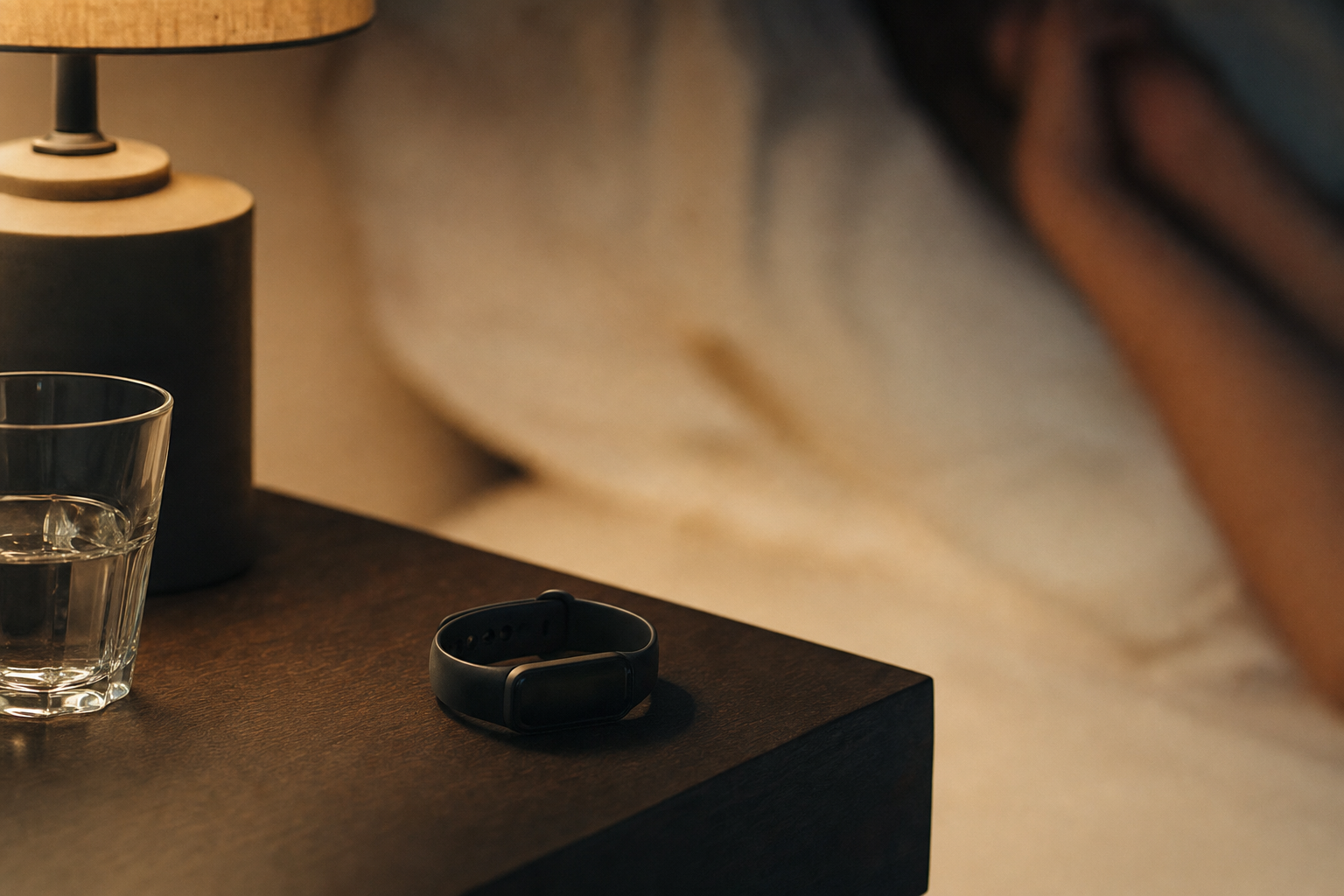
Wearable sleep tracker on a nightstand in dim evening bedroom light
What Orthosomnia Actually Is (And Why It’s Not Just ‘Being Health-Conscious’)
Orthosomnia describes a pattern in which a person’s subjective experience of sleep becomes secondary to what a device reports. Rather than sleep quality being defined by how rested someone feels, it becomes defined by a percentage, a score, or a color-coded chart.
Research in this field suggests that a notable share of habitual wearable users show signs of this pattern, with younger adults reporting the highest rates of tracker-induced stress. This tracks with broader findings on health anxiety: when a metric is presented as objective and precise, people tend to trust the number over their own bodily signals, even when the number is derived from indirect proxies like movement and heart rate variability rather than direct measurement of sleep stages.
The distinction matters clinically. Being health-conscious means using information to make gentle adjustments — maybe going to bed earlier after a rough week. Orthosomnia looks different: checking the score repeatedly, feeling distress or shame after a ‘bad’ night, and altering behavior (extra time in bed, canceled plans, supplement stacking) specifically to chase a target number rather than to feel better.
The Feedback Loop Between Sleep Anxiety and Sleep Disruption
The mechanism behind this trap is well understood in sleep science, even outside the context of wearables. Anticipatory anxiety about sleep — sometimes called sleep effort or performance anxiety — activates the same physiological arousal systems that make falling asleep difficult in the first place.
When someone lies in bed anxious about hitting a sleep score, their sympathetic nervous system engages: heart rate rises slightly, cortisol output increases, and the mental vigilance required to ‘try harder’ to sleep works directly against the neurological state sleep requires. The tracker then reports this disrupted night, which reinforces the anxiety the next evening. This is a closed loop, and it’s precisely the kind of loop that clinical sleep psychologists have long identified in insomnia treatment, now amplified by a data layer.
Signs Your Sleep Score Has Become a Source of Stress, Not Insight
Orthosomnia doesn’t announce itself. It tends to develop gradually, layered over what began as reasonable curiosity. A few patterns are worth watching for:
You check your sleep score before assessing how you actually feel in the morning.
A low score changes your mood or plans for the day, even if you feel physically fine.
You’ve adjusted your bedtime, caffeine intake, or supplement use primarily to improve a number rather than in response to how you feel.
You feel a flicker of anxiety specifically about wearing the device to bed, or dread checking the app.
You find yourself comparing scores across nights obsessively, or explaining a ‘bad’ night to others unprompted.
None of these signs alone is diagnostic. But together, they suggest the tool has shifted from informational to authoritative — from something you consult to something you obey.
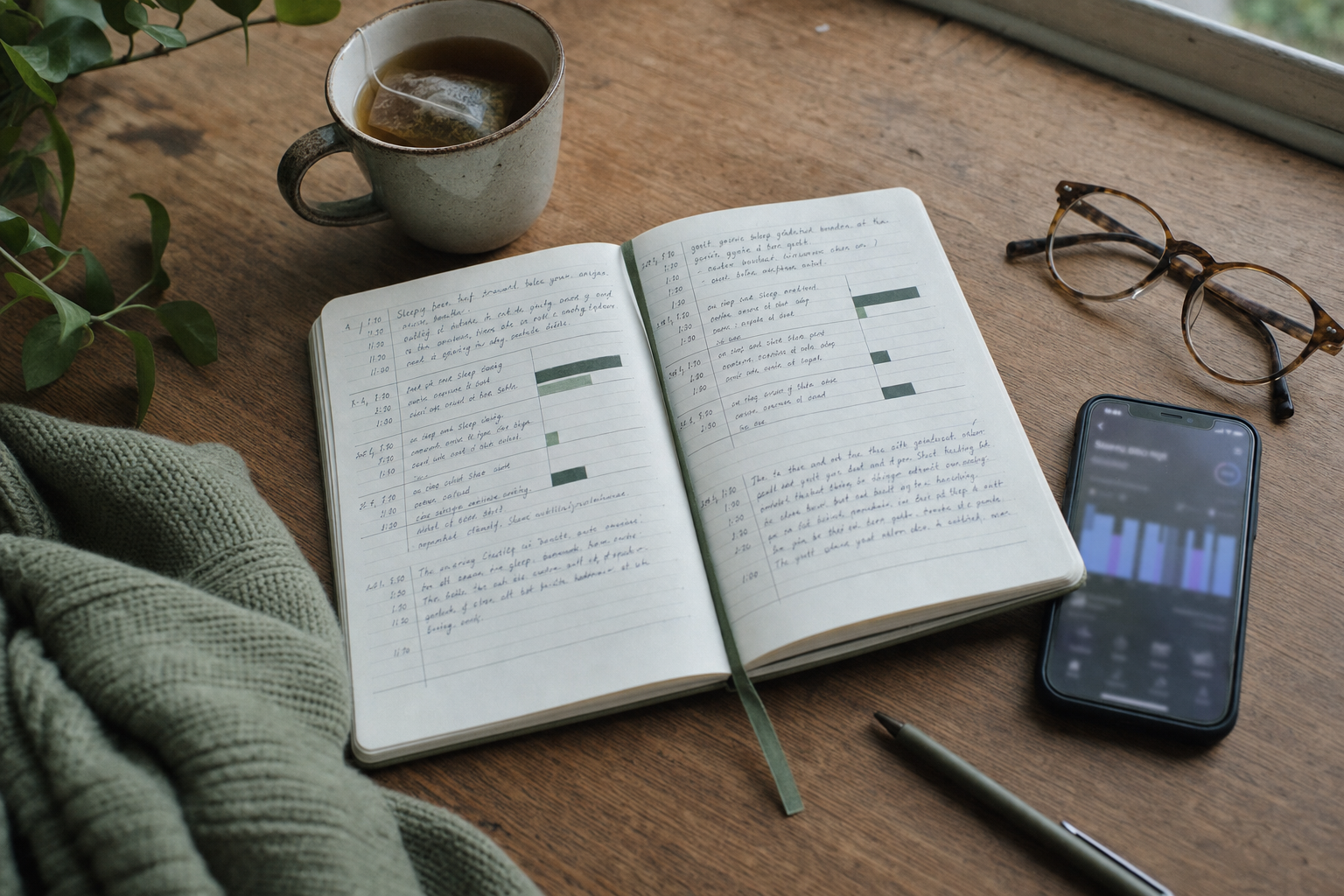
Handwritten sleep journal beside a phone displaying a blurred sleep tracking app
A Nervous-System-First Approach: Reading Trends, Not Nightly Grades
The corrective here isn’t necessarily to abandon tracking altogether — for many people, wearable data remains genuinely useful for spotting patterns like the effect of late caffeine, alcohol, or shifting bedtimes on overall rest. The recalibration is about *timescale and authority*: treating data as a slow-moving trend line rather than a nightly report card.
Sleep quality naturally fluctuates night to night due to stress, hormonal cycles, room temperature, and dozens of untracked variables. A single night’s score tells you very little in isolation. What matters more is the shape of the data across a week or a month — whether your average sleep duration is trending up or down, whether recovery patterns shift around known stressors like travel or deadlines.
The 7-Day Rule and Other Ways to Rebalance Your Relationship With Data
One practical structure that sleep clinicians and researchers in this space often recommend is a **7-day rule**: check your sleep data no more than once a week, in aggregate, rather than every morning. This single change interrupts the daily anxiety-checking loop while still preserving the trend-level insight wearables are genuinely good at providing.
A few additional adjustments that support this shift:
**Turn off morning notifications** from the sleep app so the score isn’t the first input of your day.
**Anchor your self-assessment first.** Before looking at any data, ask: how do I actually feel — energized, foggy, irritable, fine? Let that be the primary signal.
**Reframe ‘bad’ nights as data points, not failures.** A single low score reflects one night among hundreds; it is not a verdict on your health.
**Set a data-free trial period**, even briefly, to notice whether your subjective sleep experience changes when the feedback loop is removed.
When to Put the Wearable in a Drawer (And What to Do Instead)
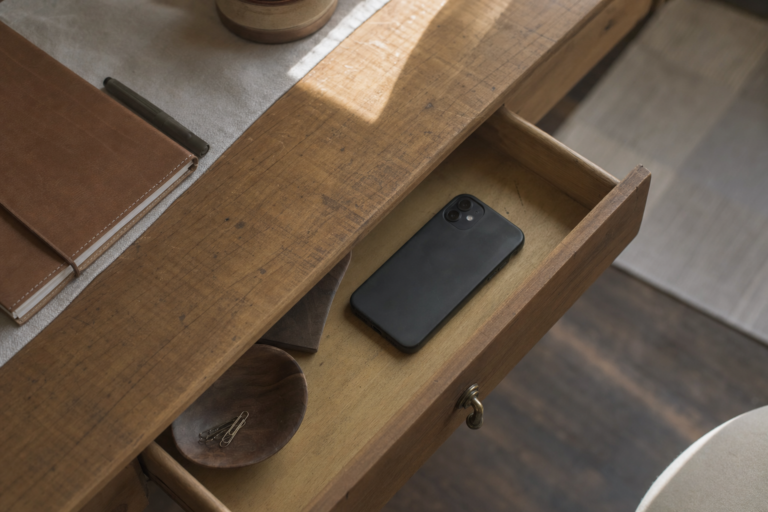
For some readers, the healthiest next step is a temporary or permanent break from tracking altogether — particularly if checking the score consistently triggers dread, or if it has visibly worsened sleep-related anxiety rather than informed helpful changes.
In place of nightly scores, sleep researchers generally point back to fundamentals that don’t require a device: consistent wake times, exposure to natural light in the morning, winding down with dim light in the evening, and limiting stimulants later in the day. These basics move the needle on real sleep architecture far more reliably than any single app metric, and they don’t come with a nightly grade attached.
If you do return to your wearable later, the goal is to re-enter that relationship on different terms — as an occasional data check-in rather than a nightly referendum on your worth or wellness.
Bare feet stepping onto wooden floor at sunrise with wearable device left on nightstand
Summary: Data Should Inform Rest, Not Define It
Orthosomnia is a real, documented pattern — not a personal failing, and not a reason to distrust all self-tracking tools. It emerges from a mismatch between how these devices are marketed (as precise, authoritative arbiters of health) and what they actually measure (indirect proxies interpreted over time).
The fix isn’t more discipline or a better score. It’s a shift in relationship: from nightly grading to occasional trend-reading, from external validation to internal signal, from a device that dictates your mood to one that quietly informs your choices. Sleep, ultimately, is regulated by a nervous system that responds far better to calm and consistency than to vigilance and measurement.
If your tracker has started to feel like a source of pressure rather than insight, that discomfort is itself useful information — arguably the most important data point of all.
—
*Want a gentler way to build sleep habits that don’t depend on a perfect score? Nachraal’s Nervous System Reset newsletter series offers weekly, evidence-based prompts for calmer, more sustainable rest — no tracker required. [Explore the series →]*
Newsletter Updates
Enter your email address below and subscribe to our newsletter