

How ‘Natural’ Became Shorthand for ‘Safe’
Walk down any skincare aisle and you’ll see it everywhere: leaf icons, kraft-paper packaging, the word "botanical" printed in a soft serif font. Somewhere along the way, "natural" stopped being a description of an ingredient’s origin and became a marketing shorthand for "gentle" or "safe."
The logic feels intuitive. Plants have been used medicinally for millennia, so surely something derived from a flower or fruit peel is inherently kinder to skin than a compound synthesized in a lab. But biology doesn’t work on branding logic. A molecule’s effect on skin depends on its chemical structure, its concentration, and how it’s delivered — not on whether it originated in a petri dish or a citrus grove.
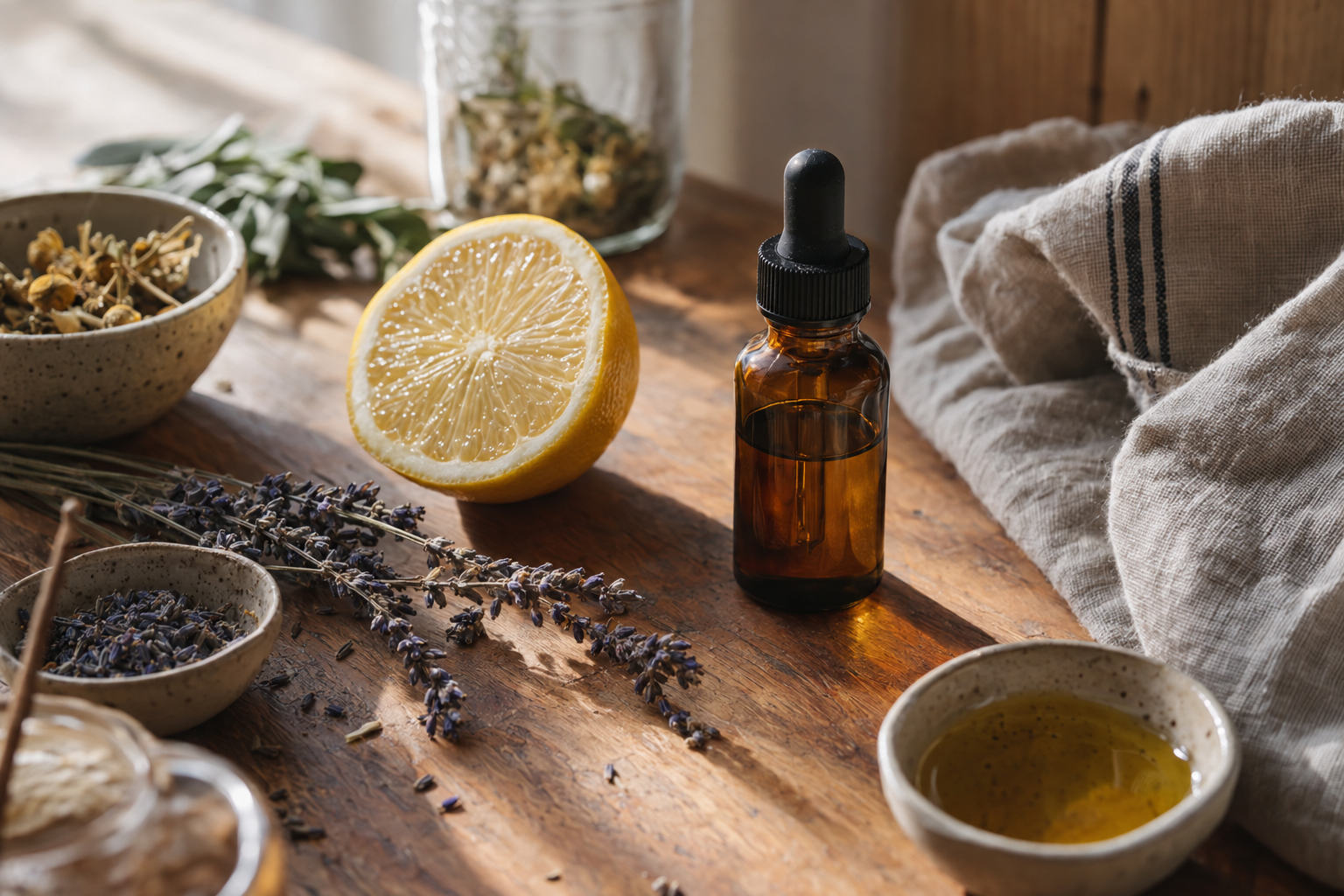
The Skin Doesn’t Check Ingredient Origin Before Reacting
Skin is a reactive organ. It doesn’t distinguish between a synthetic preservative and a plant extract when deciding whether to mount an inflammatory response — it responds to the specific molecules it encounters, at the concentrations it encounters them. Research into plant-derived compounds consistently shows enormous chemical diversity within what we casually lump together as "natural" ingredients, and that diversity carries both therapeutic potential and genuine safety complexity 4.
This matters because two ingredients can share a botanical origin story yet behave completely differently on skin. Many people tolerate chamomile extract well, though plant extracts of any kind can occasionally cause allergic reactions. Certain citrus oils and some essential oil blends, by contrast, are recognized sources of irritation and allergic contact reactions. The plant kingdom is not a uniformly gentle category — it’s a vast chemical library, and some entries are far more reactive than others.
The Sunlight Trap: Phototoxic Citrus Oils Explained
One of the clearest illustrations of this principle involves citrus oils. Cold-pressed oils from lemon, lime, bergamot, and bitter orange contain naturally occurring compounds called furanocoumarins. On their own, sitting in a bottle, these compounds are relatively inert on skin.
The problem emerges with sunlight. Furanocoumarins absorb UV radiation and, once activated, can damage skin cells in the applied area — producing a reaction called phytophotodermatitis. It shows up as redness, blistering, and dark pigmentation, which can linger after the acute reaction settles., and it’s notoriously easy to trigger accidentally: a spritz of citrus-scented product before a day outdoors, hands that brushed against lime peel before gardening in the sun.
This is a textbook case of an ingredient that is entirely plant-derived and entirely capable of causing skin injury under the wrong conditions. The origin of the compound tells you nothing about this risk. Only its chemistry — and the context in which it’s used — does.
Essential Oils and the Allergy Question
Essential oils occupy a similar paradox. They’re prized in "clean" formulations for fragrance and perceived therapeutic value, yet patch-test studies show that fragrance terpenes such as linalool and limonene become contact allergens once they oxidize on exposure to air.
This isn’t an argument that essential oils are universally dangerous. Most people use fragranced natural products without incident. But allergic and irritant reactions to plant-derived aromatic compounds are well documented in the dermatological literature, and the risk scales with concentration, frequency of use, and individual sensitization — not with how "natural" the label claims the product to be.
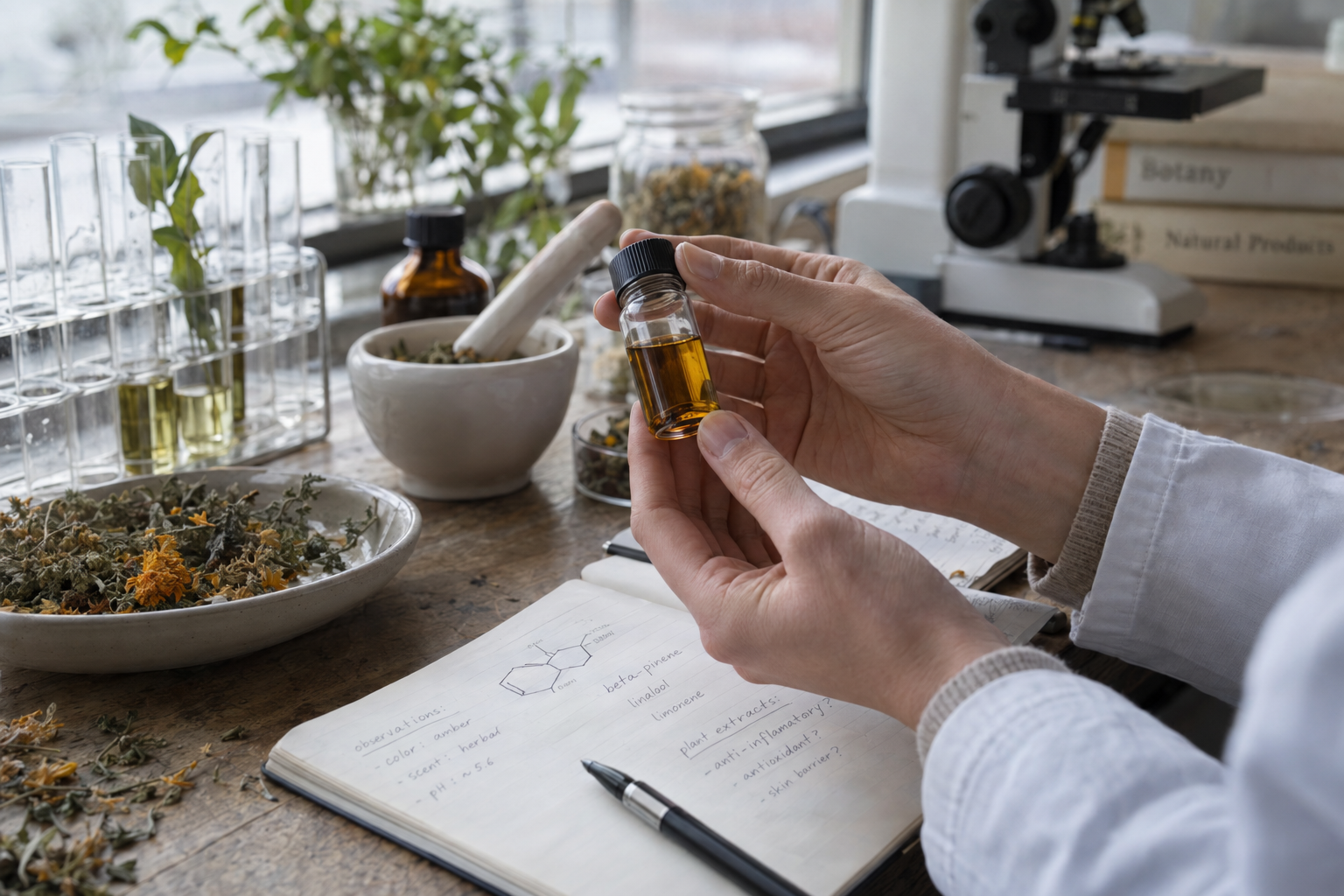
What Actually Determines Whether an Ingredient Works or Irritates
If origin isn’t the deciding factor, what is? The answer lies in a small set of variables that apply equally to plant-derived and synthetic ingredients alike: the specific molecule involved, how much of it is present, how it’s formulated into the final product, and how an individual’s own skin biology responds to it.
Bioprospecting research into plant-derived natural products underscores this directly — evaluating a botanical compound for cosmetic or therapeutic use requires the same rigor applied to any bioactive substance, spanning chemical characterization, efficacy testing, and safety assessment before a fair judgment can be made 4. A compound isn’t exempted from that process because it came from a leaf rather than a flask.
Dose, Concentration, and Delivery Matter More Than the Source
Consider how differently the same plant compound can behave depending on concentration. A trace amount of an essential oil in a well-formulated moisturizer, buffered by emollients and tested for stability, may be entirely tolerable. The same compound at a higher concentration, applied undiluted, or combined with sun exposure, can cross into irritant or phototoxic territory.
Formulation also changes how a compound interacts with skin. Encapsulation, dilution, and the presence of other ingredients (like antioxidants or emollients) can all buffer a potentially reactive compound. This is precisely why bioprospecting work treats efficacy and safety as inseparable — a molecule’s therapeutic potential and its risk profile are two sides of the same chemical coin, requiring translational research to properly balance 4.
Individual biology adds a final layer. Skin barrier integrity, prior sensitization, and even the season can shift how a person responds to the same product. This is why patch testing, gradual introduction of new products, and ingredient literacy matter more than trusting a front-of-package label.

A Practical Framework for Reading ‘Clean’ and ‘Natural’ Labels
Given all this, how should a careful reader approach a product labeled "natural," "clean," or "plant-based"? A few practical habits go a long way:
- Look past the marketing language to the ingredient list. "Natural" and "clean" are not regulated, standardized terms — they describe positioning, not safety data.
- Check where a fragrant or citrus-derived ingredient sits in the formulation and how the product instructs use. Leave-on products used before sun exposure warrant more caution than rinse-off products.
- Patch test new botanical products, especially those containing essential oils or citrus extracts, on a small area of skin before full-face application.
- Treat concentration as a clue. A botanical extract listed near the top of an ingredient list (implying higher concentration) deserves more attention than one listed near the bottom.
- Remember that tolerance is individual. A product that works beautifully for one person’s skin can still cause irritation in another, regardless of its ingredient origin.
None of this means plant-derived ingredients should be avoided. Many botanical compounds have genuine, well-supported roles in skincare. The point is narrower and more useful: evaluate them with the same scrutiny you’d apply to any active ingredient, natural or synthetic.

Editorial Summary
The "natural equals safe" assumption is comforting, but it doesn’t hold up against how skin actually responds to chemistry. Furanocoumarins in citrus oils and allergenic compounds in essential oils are two concrete examples of plant-derived ingredients that carry real, well-documented risks under certain conditions. At the same time, plant-derived compounds remain a genuinely rich source of effective skincare ingredients when their chemistry, dose, and formulation are properly understood 4.
The more useful question isn’t "is this ingredient natural?" but "what is this ingredient, at what concentration, delivered how, and how does my skin respond to it?" That shift in framing — from origin to evidence — is what separates informed skincare choices from marketing-driven ones.
Keep reading
- Skin Longevity, Not Perfection: Why Prevention Wins in Your 20s-30s
- Skin Cycling vs. Flooding vs. Slugging: A Decision Tree
- The Barrier Reset: Why ‘Less but Better’ Beats 12-Step Routines
Sources
[1] New Insights Concerning Phytophotodermatitis Induced by Phototoxic Plants. Life (Basel) (2024). PubMed
[2] Oxidized limonene and oxidized linalool – concomitant contact allergy to common fragrance terpenes. Contact Dermatitis (2016). PubMed
[3] Selected oxidized fragrance terpenes are common contact allergens. Contact Dermatitis (2005). PubMed
[4] Air oxidation increases skin irritation from fragrance terpenes. Contact Dermatitis (2009). PubMed